
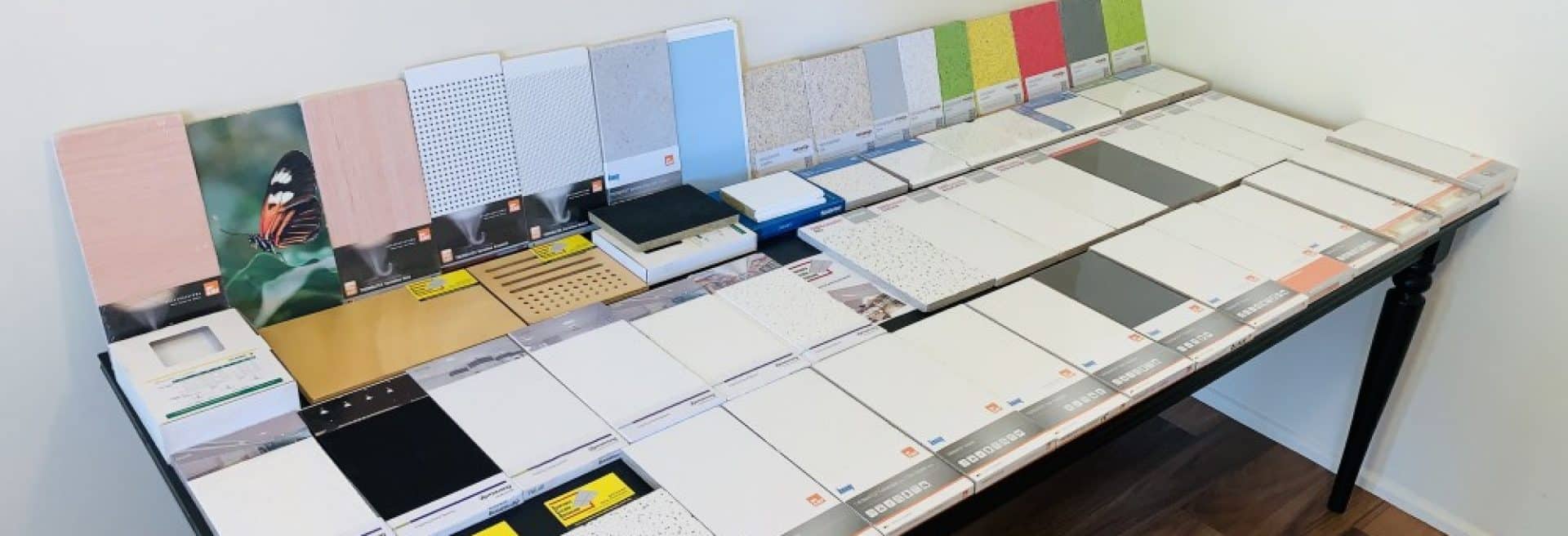

Black ceiling tiles are no longer a niche design trend. Across Brisbane and Queensland, they have become a deliberate, performance-driven ceiling solution used in commercial offices, retail environments, hospitality venues, education facilities, and architectural fitouts where acoustics, visual control, and long-term serviceability matter.
When specified and installed correctly, black ceiling tiles deliver exceptional acoustic control, reduce visual clutter, and support complex service coordination. When specified poorly, they expose mistakes faster than almost any other ceiling finish.
This page explains how black ceiling tiles actually perform in real commercial environments, where they work best, how they differ from standard white ceiling systems, and why correct specification matters far more than colour alone.
What Are Black Ceiling Tiles?
Black ceiling tiles are factory-finished suspended ceiling tiles manufactured with a black face and matching edge detail. Unlike painted ceiling tiles, factory-finished tiles retain their acoustic properties, moisture resistance, fire performance, and structural stability.
They are installed within suspended ceiling grid systems, providing full access to services above the ceiling, including lighting, HVAC, fire protection, and data infrastructure. This access is critical in modern commercial buildings where systems change regularly over the life of a tenancy.
In most commercial installations, black ceiling tiles are paired with factory-finished black ceiling grid to create a continuous, visually controlled ceiling plane rather than a patchwork of exposed services.
Why Black Ceiling Tiles Are Used in Commercial Fitouts
Black ceilings are not chosen randomly. They solve repeatable problems in commercial interiors.
First, black ceilings visually reduce perceived ceiling height. In large open spaces, this creates scale and intimacy without introducing bulkheads, soffits, or partitions that restrict flexibility.
Second, black ceilings reduce glare. In environments with extensive glazing, exposed lighting, or high-reflectivity finishes, white ceilings can overwhelm a space. Black ceiling tiles absorb excess light and improve visual comfort for occupants.
Third, black ceilings conceal services. Ductwork, cable trays, penetrations, and structural elements visually recede when integrated into a dark ceiling plane. This allows lighting, furniture, branding, and architectural features to take priority.
Finally, black ceiling tiles deliver strong acoustic performance when specified correctly. In open-plan offices, retail spaces, and hospitality venues, noise control directly affects comfort, productivity, and dwell time.
Where Black Ceiling Tiles Work Best
Black ceiling tiles perform particularly well in the following environments:
- Open-plan commercial offices with collaboration zones and meeting areas
- Retail stores and showrooms where product presentation matters more than ceiling prominence
- Hospitality venues such as cafés, bars, and dining spaces where noise control and atmosphere are critical
- Education and training facilities requiring acoustic performance and service flexibility
- Medical and consulting suites where controlled lighting improves comfort
- Mixed-use and architectural spaces combining glazing, exposed structure, and clean finishes
They are especially effective in buildings with higher ceilings, exposed concrete structures, or extensive glazed façades where visual control is essential.
Black Ceiling Tiles vs White Ceiling Tiles
White ceiling tiles reflect light and visually enlarge spaces. Black ceiling panels do the opposite — and that contrast is intentional.
White ceilings often become the brightest surface in a room, pulling attention upward. Black ceilings push attention downward toward occupants, furniture, and displays.
Acoustically, both black and white tiles can perform well if specified correctly. The difference lies in intent. Black ceiling tiles are rarely chosen accidentally, which usually leads to better system-level thinking and coordination.
Black ceilings are not about hiding poor design. They are about controlling it.
Types of Black Ceiling Tiles Used in Commercial Projects
Not all black ceiling tiles are the same. Selection depends on environment, performance requirements, and service conditions.

Mineral Fibre Black Ceiling Tiles
Mineral fibre tiles remain the most common option for commercial offices, education spaces, and retail fitouts. They offer consistent colour, reliable acoustic absorption, and compatibility with standard suspended grid systems.
These tiles balance performance, durability, and cost, making them suitable for high-traffic environments with frequent ceiling access.
High-Performance Acoustic Black Ceiling Options
High-NRC black ceiling tiles are specified where speech clarity matters. Boardrooms, classrooms, training rooms, and shared workspaces benefit significantly from higher acoustic absorption.
In many cases, upgrading ceiling tile performance reduces the need for additional wall treatments, improving both aesthetics and cost efficiency.
Moisture-Resistant Black Ceiling Tiles
Queensland conditions demand careful attention to humidity. Moisture-resistant black ceiling tiles are commonly used in buildings with inconsistent HVAC performance, coastal exposure, or high internal moisture loads.
These tiles resist sagging, staining, and long-term deformation. Many are the same products specified for swimming centres and humid indoor environments, making them ideal for Queensland commercial fitouts.
Feature and Designer Black Ceiling Finishes
Some projects incorporate textured, perforated, or patterned black ceiling tiles to introduce visual interest. These are typically used selectively rather than across entire ceilings.
They are often combined with standard tiles to maintain acoustic balance and manage cost.
Why Painted Ceiling Tiles Are a Bad Idea
Painting standard ceiling tiles black is one of the most common mistakes in commercial fitouts.
Paint blocks the acoustic pores of ceiling tiles, dramatically reducing sound absorption. It also adds weight, leading to sagging and premature failure.
Painted tiles void manufacturer warranties, compromise fire performance, and create long-term maintenance problems. They chip, fade, and require replacement far sooner than factory-finished alternatives.
Factory-finished black ceiling tiles exist for a reason. In commercial environments, they should always be used.
Black Ceiling Grid Systems and Finishes
A black ceiling is only as good as the grid that supports it.
Factory-finished black grid systems maintain colour consistency, resist scratching, and withstand repeated tile access. Painted grid systems, by contrast, show wear quickly and compromise visual quality.
Grid specification must account for:
- Tile weight and size
- Ceiling loads
- Seismic restraint requirements
- Lighting and service integration
Correct grid selection ensures long-term performance, compliance, and clean visual lines.
Acoustic Performance in Commercial Ceiling Systems
Acoustic performance is one of the primary reasons black ceiling tiles are specified.
In open-plan offices, they reduce background noise and improve speech clarity. Whereas, in retail environments, they limit echo and create calmer spaces. In hospitality venues, they prevent noise build-up during peak occupancy.
Actual acoustic performance depends on:
- NRC rating of the tile
- Ceiling height and room volume
- Wall and floor finishes
- Lighting and diffuser placement
Ceilings do not work in isolation. Tile selection must consider the entire space. View here for more information on noise control ceiling solutions.
Lighting Design With Black Ceiling Tiles
Black ceilings absorb light. This is not a flaw — it is a design tool.
However, lighting must be planned alongside the ceiling system. Linear LED lighting, feature lighting, and controlled downlight placement work best with black ceilings.
Poor lighting coordination results in dim spaces and uneven illumination. This is not a ceiling problem; it is a design coordination failure.
We regularly coordinate with electricians and designers to ensure lighting levels meet compliance while achieving the intended visual effect.
Common Mistakes in Black Ceiling Tile Projects
Black ceilings expose errors faster than white ceilings.
Common mistakes include:
- Choosing tiles based on colour alone
- Under-specifying acoustic performance
- Using painted grid systems
- Failing to coordinate lighting layouts
- Ignoring humidity and HVAC conditions
Each of these issues is preventable with correct specification and experience.
Cost Considerations for Black Ceiling Tile Installations
Black ceiling options are not inherently expensive. Poor planning is.
Cost drivers include:
- Tile performance ratings
- Grid system selection
- Ceiling height and access conditions
- Lighting and service coordination
- Installation complexity
Higher-performance tiles often reduce the need for additional acoustic treatments, lowering overall project cost.
Black Ceiling Tiles in Queensland Conditions
Queensland’s climate places unique demands on ceiling systems.
Humidity, temperature variation, and coastal exposure affect long-term performance. Incorrect tile selection leads to sagging, staining, and premature replacement.
Moisture-resistant tiles are frequently specified even in standard commercial spaces to ensure durability. Suspended ceiling systems also provide ongoing access for HVAC maintenance, which is critical in Queensland buildings.
Correct specification prevents long-term issues.
Fire, Compliance, and Safety Requirements
Commercial ceiling systems must comply with:
- NCC requirements
- Relevant Australian Standards
- Project-specific fire ratings
Black ceiling tiles are available with fire-rated, low-VOC, and healthcare-compliant specifications. Colour does not affect compliance — poor product selection does.
Commercial suspended ceiling systems must also comply with relevant Australian Standards and National Construction Code (NCC) requirements, particularly in relation to fire performance, access to services, and long-term durability.
Painting tiles or grids compromises tested fire performance and should never be used in regulated environments.
Installation Quality Matters More With Black Ceilings
Black ceilings highlight installation quality.
Misaligned grid lines, inconsistent spacing, and poor detailing stand out immediately. Precision is essential.
We focus on:
- Accurate grid layout
- Clean integration with services
- Consistent tile alignment
- Long-term access and maintenance
A poorly installed black ceiling cannot be hidden.
Black Ceiling Finishes in High-Traffic Commercial Environments
Black ceiling tiles are widely used in high-traffic commercial environments where durability and access matter as much as appearance.
Retail environments benefit from reduced visual clutter. Offices benefit from improved acoustic comfort. Public and mixed-use buildings benefit from flexibility and service access.
In these spaces, ceiling systems must perform under constant change. Suspended black ceiling systems are designed for exactly that.
Black Ceilings vs Exposed Service Ceilings
Black ceiling tiles are often used as a controlled alternative to fully exposed ceilings.
Exposed services can look striking, but they introduce higher reverberation, visible clutter, dust accumulation, and ongoing cleaning requirements.
A black suspended ceiling achieves similar visual outcomes while maintaining acoustic control, fire compliance, and serviceability.
When Black Ceilings Not the Right Choice
Black ceiling tiles are not suitable for every environment.
Low-ceiling spaces with limited lighting budgets may struggle to achieve adequate illumination. Spaces requiring maximum light reflectance may prioritise white ceiling systems.
The decision to use black ceiling tiles should always be based on performance and intent, not trend. For other tiles choices view our full ceiling tile range.
How Black Ceiling Tiles Fit Into a Complete Ceiling Strategy
Black ceiling tiles rarely stand alone.
Many commercial projects use black ceilings selectively in feature zones while maintaining standard systems elsewhere. This approach balances cost, performance, and visual impact.
For broader system options, our ceiling tile range outlines products used across commercial environments. For projects where sound control is critical, our acoustic ceiling solutions explain how performance varies by tile type.
Black ceilings perform best when integrated into a complete ceiling strategy.
Why Choose Suspended Ceilings QLD
We install black ceiling tiles as part of complete commercial ceiling systems across Brisbane and Queensland.
We understand:
- Real-world acoustic performance
- Queensland climate demands
- Service coordination challenges
- Long-term maintenance requirements
Our approach ensures ceilings perform as intended — not just at handover, but for years afterward.
Speak With Us About Your Project
If you are considering black ceiling tiles for a commercial fitout or upgrade, we can help you select the right system for your space, budget, and conditions.
Contact Suspended Ceilings QLD to discuss your project requirements and get clear, practical advice before installation begins.ear, practical advice before installation begins.