
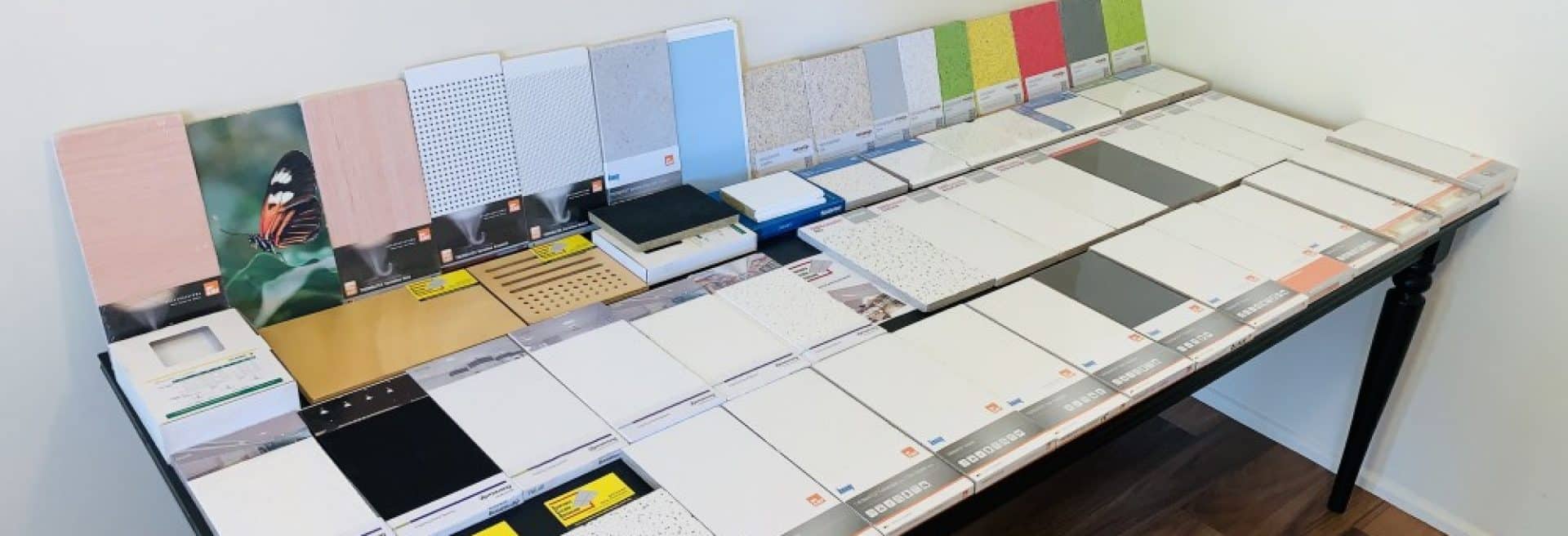
Armstrong is one of the most trusted names in acoustic ceiling tiles, thanks to its high-quality products and innovative designs. If you’re looking for Armstrong ceiling tiles in Brisbane or anywhere in Queensland, this guide provides all the essential information in one place. We’ve pulled together product reviews, specifications, use cases, and even video demos. Our goal is to help you choose the right Armstrong tile for your project. By consolidating all Armstrong-related content here, we eliminate fragmented info and keep the focus on Armstrong acoustic ceiling solutions in QLD.
Armstrong’s ceiling tile range includes both economical and premium acoustic options. Armstrong offers a wide variety of ceiling tile choices to suit different budgets and design needs. From classic fissured textures to smooth designer finishes, there’s an Armstrong tile for every space.

Why Choose Armstrong Ceiling Tiles?
Proven Quality and Reputation of Armstrong Ceiling Tiles
Armstrong Ceiling Solutions (now part of Knauf) has a long history of quality and innovation. Thomas M. Armstrong founded the company in 1860. Over the decades, it grew into a global leader in ceilings【10†】. Armstrong tiles have a strong reputation for durability and come with excellent manufacturer warranties【11†】. In fact, Armstrong is so trusted that many Australian school ceilings specify their tiles as the standard – it’s a true testament to the product’s quality and performance【10†】.
Acoustic Performance
Armstrong designs its acoustic ceiling tiles for effective sound control. The product line includes tiles with high NRC (Noise Reduction Coefficient) to absorb sound and reduce echo. There are also options with high CAC (Ceiling Attenuation Class) to block noise from traveling between rooms. For example, the popular Armstrong Ultima tile boasts an NRC of 0.70 and a CAC of 41【12†】. This means it quiets the room below and helps prevent noise from entering from above. With Armstrong, you can create quieter, more private spaces. These acoustic tiles are ideal for classrooms, offices, medical centers and more.
Range of Options
One big reason we often recommend Armstrong is the sheer variety of tiles available【11†】. They offer everything from basic mineral fiber tiles for tight budgets to high-end designer acoustic panels. You might need a simple tile for a small office. Or perhaps a premium acoustic panel for a large conference room. Either way, there’s likely an Armstrong product that fits your requirements. Because Armstrong is a market leader, their tiles are readily available in Queensland through our suppliers. We supply and install genuine Armstrong ceiling tiles throughout Brisbane and regional QLD.
Trusted in QLD Projects
Suspended Ceilings QLD has installed Armstrong ceilings in numerous local projects. These range from schools and universities to corporate offices and retail fitouts. We’ve seen firsthand how well these tiles perform over time. The combination of strong acoustics and solid build quality makes them a go-to choice for many clients. Armstrong also has a strong presence in Australia under the Knauf umbrella. You can trust that replacement tiles (or new tiles) will be available whenever you need them. In short, choosing Armstrong means choosing reliability, acoustic comfort, and proven results.
View the full Armstrong Ceiling Tile range
Armstrong Ceiling Tile Range Overview
Armstrong offers a diverse range of acoustic ceiling tiles, each with unique features. Below we highlight the most popular Armstrong tiles we use, along with their key specs, benefits, and ideal applications. This includes classic tiles like Fine Fissured and Dune, high-performance tiles like Ultima and Perla, and even a black acoustic tile (Optra) for specialty designs. By understanding the differences, you can select the perfect tile for your space.
Armstrong Fine Fissured (RH99) – Popular Economical Acoustic Tile
Armstrong Fine Fissured is one of the most popular acoustic ceiling panels in Australia. It’s known for its subtle “pinhole” textured face and solid overall performance. This mineral fiber tile provides good all-around sound absorption at an affordable price【13†】.
There are several reasons this tile is so widely used:
Great Value: Armstrong Fine Fissured offers great value for money【14†】 – you get a reliable acoustic tile without breaking the budget.
Good Acoustics: It performs well acoustically for general noise reduction needs【13†】.
Multiple Edge Options: It comes in a wide variety of edge details (square lay-in, tegular, etc.) to suit different ceiling looks【13†】.
Imperial Sizing Available: It’s one of the few tiles in Australia available in an imperial size (e.g. 1200 x 610 mm)【13†】. This is useful for replacing older 2’x4’ ceiling panels without modifying the grid.

Armstrong Fine Fissured Tile Performance and Applications
Despite being a budget-friendly option, Fine Fissured still comes with Armstrong’s quality assurance. The standard Fine Fissured has medium acoustic ratings (around NRC 0.55 and CAC ~35 in typical configurations). Armstrong also offers enhanced versions, such as High-NRC or High-CAC variants of Fine Fissured for projects needing extra sound control. The “RH99” designation indicates high humidity resistance – these tiles resist sagging up to 99% relative humidity. That tolerance is especially important in Queensland’s climate to prevent warping or staining.
For everyday offices, classrooms, shops, and other commercial spaces, Fine Fissured is a dependable choice. Its neutral white finish and gentle texture blend into most environments. If a tile becomes damaged or discolored over time, replacements are inexpensive. Rather than repainting a stained mineral fiber tile (which can harm its acoustic properties), it’s usually best to simply replace it. Fine Fissured’s low cost makes replacement practical.
Video Review: Want to see this tile up close? Watch our quick video review of the Armstrong Fine Fissured ceiling tile, where we discuss why it’s so popular and how it performs in real installations:
Armstrong Dune & Dune Max – Lightly Textured Acoustic Tiles
Armstrong Dune is another widely used ceiling tile, notable for its light sand-textured face. These tiles have a matte white, sandy finish that some clients prefer over the traditional pinhole look. The texture is subtle but gives the ceiling a bit more character and design flair while still maintaining a clean appearance. Dune comes in multiple versions, including the standard 15–16 mm thick tile and Dune Max, which is a thicker (~20 mm) panel for higher acoustic needs. There are even Dune plank sizes and a Second Look variant (which mimics smaller sub-tile patterns) for added design options.

Armstrong Dune Acoustic Performance and Uses
Because Armstrong Dune is offered in various thicknesses and edge configurations, it provides a spectrum of acoustic performance levels. Thicker tiles like Dune Max typically achieve better sound absorption (NRC) and can even offer decent sound blocking between rooms. This flexibility means there’s a Dune option for many settings. A standard office might use the basic Dune, whereas an open-plan area can benefit from the higher-acoustic Dune Max.
Dune tiles install in the same standard T-bar grids as other tiles. They are available in the common 600 x 600 mm and 1200 x 600 mm metric sizes. Armstrong also offers special Dune plank sizes for unique design layouts. We often recommend Dune for offices, retail spaces, corridors – really any project where you want a little texture on the ceiling without sacrificing acoustic function. The tiles are durable and soil-resistant, though like all mineral fiber products they can scuff if handled roughly. Overall, Armstrong Dune provides a nice middle ground between the basic fissured tiles and the ultra-smooth premium tiles. It strikes a balance in both look and price.
Armstrong Ultima – High-Performance Smooth Acoustic Tile
Armstrong Ultima is a premium acoustic ceiling tile that has earned its place as the go-to “school tile” in Australia. If you’ve been in a modern classroom or lecture hall, there’s a good chance you’ve seen Ultima overhead. So, what makes Ultima special? For starters, it features a smooth, finely textured white finish that many people find more attractive than the rough, fissured look. This smooth face, combined with a high light-reflective coating, helps brighten the room and gives a clean, upscale appearance – great for offices and learning environments where good lighting is important. Ultima tiles also have a scratch-resistant Durabrite™ surface that holds up well to occasional contact without chipping【15†】.

Armstrong Ultima Acoustic Performance Highlights
Acoustically, Armstrong Ultima is a top performer. It offers high sound absorption (NRC around 0.70) to cut down echo and reverberation, resulting in quieter, more comfortable rooms. At the same time, Ultima provides excellent sound attenuation (CAC in the 40+ range), meaning it helps block noise transfer through the ceiling plenum. Few ceiling products excel at both absorption and blocking, so Ultima’s balanced acoustic performance really stands out. In practical terms, Ultima is ideal for places like schools (to keep classrooms quiet) and offices or medical suites (to ensure speech privacy between rooms). In fact, many standard office partition designs in Australia rely on a high-CAC tile like Ultima. This way, you don’t need full-height walls because the ceiling itself helps contain the sound.
Installation and Usage Considerations for Armstrong Ultima
Ultima comes in various sizes and edge types (square lay-in, tegular, MicroLook, and the concealed K2C2 edge). The panels are a bit heavier than cheaper tiles (around 5.2 kg/m²), reflecting their dense construction. However, they are still straightforward to install in a normal T-bar suspension system. The newer Ultima+ panels carry an RH99 humidity-resistance rating. This means they won’t sag even in very humid conditions – a big plus in Brisbane’s climate or in spaces without overnight air-conditioning. Ultima is also certified sustainable (Green Star credits are applicable), using high recycled content in its production.
In summary, Armstrong Ultima is an outstanding acoustic tile for premium applications. It delivers on both form and function. You get a smooth, bright-looking ceiling with the acoustic muscle to create quiet, private spaces. The primary consideration is cost – Ultima is pricier than basic tiles, so it’s best used where its performance is truly needed. If your project warrants that extra investment for superior acoustics and appearance, Ultima is worth every cent. We often arrange samples of Ultima for clients to compare against cheaper tiles, and the difference in finish and heft is noticeable.
Video Review: See the Armstrong Ultima up close and learn more about its benefits in our in-depth review video below. In the video, we demonstrate Ultima’s finish and discuss how its acoustic stats translate to real-world benefits.)
Armstrong Perla – Modern Smooth Tile with High Acoustic Ratings
If you’re looking for the latest in acoustic ceiling technology, Armstrong Perla is a product to consider. The Perla range is one of Armstrong’s newer offerings and has been growing in popularity due to its combination of an ultra-smooth finish and exceptional acoustics. Visually, Perla tiles have an even smoother, more refined surface than Ultima. This creates a very modern, clean ceiling look that designers love. It almost resembles a plasterboard ceiling, yet it’s actually a drop-in acoustic tile. This makes Perla a top choice for high-end offices, boardrooms, galleries, or any space where aesthetics are as important as sound control.
Performance-wise, Armstrong Perla panels boast impressive sound absorption. Some variants achieve NRC values higher than competing tiles in the same class. For instance, the Perla OP 0.95 version offers an NRC of up to 0.95, meaning it absorbs 95% of sound. That’s about as high as it gets for an acoustic tile. Many Perla tiles also provide strong sound-blocking performance (especially the dB or “decibel” versions). This aligns with Armstrong’s “Total Acoustics” feature set, which combines high NRC + high CAC in one product. In simple terms, Perla can create very quiet interiors by both absorbing internal noise and blocking external noise. This combination is an ideal scenario for flexible work and learning spaces.
Armstrong Perla Installation and Applications
Despite the advanced performance, Perla tiles are not excessively thick. They come in 15 mm to 18 mm thickness, depending on the model. Armstrong managed to keep the panel thickness (and weight) reasonable, which helps control costs and makes handling easier. Installation is similar to other mineral fiber tiles. Our team has found that Perla’s crisp white surface resists dirt to some extent. However, installers should still wear gloves and avoid touching the face to prevent any finger marks on the smooth finish. Like Ultima, Perla also has high humidity tolerance. It’s suitable for use in air-conditioned or humid spaces without risk of sagging.
In Queensland, we are seeing Perla used more frequently in projects that previously might have specified Ultima or even an imported European tile. This is a sign that Perla’s reputation is growing. If you desire a pristine, unobtrusive ceiling with top-tier acoustics, Armstrong Perla is an excellent choice. It brings a contemporary look and premium performance, solidifying Armstrong’s position as a leader in acoustic ceilings. As always, we can provide guidance on whether Perla, Ultima, or another tile is best suited to your specific requirements. Just ask us for a comparison if you need help choosing.
Armstrong Optra (Black or White Tiles) – High-NRC Panels for Designer Ceilings
Not all ceilings are white! Armstrong Optra is a special fiberglass acoustic tile available in both white and black finishes. While the black version is by far the most popular – especially in cinemas, clubs, studios, or modern offices – the white variant offers the same acoustic benefits with a clean, bright appearance.
Optra tiles are known for their ultra-dark matte black option, which is ideal for concealing ceiling infrastructure. Lighting fixtures, ducts, and cables visually disappear against it, creating a sleek, contemporary look. And because it’s an off-the-shelf black tile (not a white tile painted on-site), the finish remains uniform and durable.
Armstrong Optra Acoustic Performance
Acoustically, Optra tiles are strong performers with an NRC of up to 0.90 depending on the variant. This makes them highly effective at absorbing sound, reducing echo, and controlling noise levels in open-plan or high-volume spaces. For many of our clients, Optra tiles are the solution to maintaining good sound control in visually demanding environments.
From a practical standpoint, using a factory-finished tile like Optra – along with Armstrong’s matching grid – simplifies installation. It avoids common issues like paint flaking or stuck panels that arise with DIY black ceilings. Each tile remains removable, enabling easy future access.
Whether in black or white, Armstrong Optra delivers professional acoustic results and high visual impact. If you’re unsure which colour best suits your space, we’re happy to provide samples and guidance for the best fit.

Installation & Design Notes for Optra
Because Optra tiles are lightweight, they are very easy to handle and cut. However, their low weight also has a downside. If you plan to place heavy services on top of the tiles (such as air-conditioning returns or light fittings – a practice known as backloading), you should verify the load capacities first. If you’re unsure, we can check with the local Armstrong rep for any special considerations when backloading heavy items on these fiberglass panels.
In our experience, when we install Optra tiles with Armstrong’s black exposed grid, the system clicks together nicely. The cross tees even give an audible “snap” when locked, so you know it’s secure. You won’t have to worry about loose T-bars or sagging grid pieces. The result is a beautiful, monolithic black ceiling that not only looks modern but also significantly improves the acoustics in the space.
For architects and designers aiming for that “black box” look, Armstrong Optra Black is a fantastic solution that doesn’t compromise on sound absorption. The tile’s finish is smooth (with no fissures) and the color is deep and uniform. Optra also pairs perfectly with wood panels or other decorative elements. For instance, we’ve installed black Optra tiles adjacent to timber slat feature ceilings, and the combination is striking. If you’re considering a black ceiling, we’d be happy to show you samples of Optra and discuss how it can be integrated into your project.
Best Uses for Armstrong Ceiling Tiles
One of Armstrong’s strengths is that there’s a tile suited for almost every environment. Here are some common use cases and our recommendations:
- Offices & Boardrooms: For typical offices, Armstrong Fine Fissured or Dune tiles provide a good balance of cost and basic acoustic performance. In executive boardrooms or meeting rooms where confidentiality is key, consider upgrading to Ultima or Perla dB tiles. This upgrade can greatly improve privacy by adding sound attenuation. The high CAC of those premium tiles means conversations stay inside the room.
- Schools & Universities: Armstrong Ultima has long been the standard in Australian schools (for good reason). In classrooms and lecture halls, Ultima’s combination of sound absorption and sound blocking creates an ideal learning environment. High absorption reduces echo for better speech intelligibility, and the sound blocking limits noise between adjacent rooms. Its durable, scratch-resistant finish is also beneficial in active school settings. For school theaters or black box studios, Optra Black tiles are a popular choice to control sound and eliminate visual distractions from the ceiling.
- Healthcare & Labs: Healthcare facilities often demand ceiling tiles with antimicrobial or washable surfaces. Armstrong addresses this need with specialty lines like Bioguard Acoustic (not covered in detail here), which provide acoustic control along with fungal and bacterial resistance. However, Perla or Ultima tiles can also work well in many medical offices, offering cleanable surfaces and high acoustic performance for patient privacy. Always ensure the tile you choose meets any required health standards for your facility.
- Retail & Hospitality: Retail stores, restaurants, and hotels sometimes favor Dune or Fine Fissured tiles for general areas. These tiles provide decent acoustics while being very cost-effective for covering large areas. The subtle texture of Dune can add a bit of style in boutiques or cafes. In upscale retail or hotel lobbies, Perla tiles offer a premium, refined look. And for bars, cinemas, or music venues with a dark interior design, Armstrong Optra Black is ideal for achieving the desired ambiance. It also helps control noise levels in these lively spaces.
- Industrial & Warehouse Offices: In workshops or warehouse office areas, vinyl-faced plasterboard tiles are common because they can be easily wiped clean. However, if acoustics are needed, Armstrong’s mineral fiber tiles can be used in office build-outs within these facilities. Be mindful of moisture if the space isn’t climate controlled. Choose tiles with higher humidity resistance (Armstrong’s RH90+ rated tiles, or the Ceramaguard line for extreme conditions). For very noisy industrial areas, you can also combine ceiling tiles with additional insulation or acoustic baffles. Armstrong offers Soundscapes acoustic panels and ceiling canopies for supplemental noise control if needed.
In short, Armstrong ceilings are extremely versatile. By selecting the appropriate tile, you can address the specific needs of your space – whether it’s quieting a call center, brightening a classroom, or creating an intimate atmosphere in a restaurant. Our team is always happy to advise on the best Armstrong tile for any given application.
Product Availability in Brisbane & QLD
Armstrong ceiling tiles are generally readily available across Brisbane and Queensland for our projects. Armstrong (through Knauf) maintains strong distribution in Australia. Most common tiles like Fine Fissured, Dune, Ultima, etc. are stocked locally or can be obtained on short order without long delays. In fact, Armstrong Optra (in both white and black) is typically available off-the-shelf. This means short lead times and competitive pricing for black ceiling projects. Some specialty items (like certain Perla models or custom sizes) might have a lead time. However, we will coordinate to get them for you as efficiently as possible.
It’s worth noting that the ceiling tile industry has seen some changes in recent years (manufacturer mergers and product line updates). Armstrong’s ceiling division in Australia is now part of Knauf Ceiling Solutions, which has consolidated some ranges. Rest assured that the core Armstrong products remain in production and fully supported. When you work with Suspended Ceilings QLD, we handle the sourcing for you. We tap into our network of local wholesalers to get the exact Armstrong tiles you need. We deliver and install throughout South East Queensland and beyond. Whether your project is in Brisbane, the Gold Coast, Sunshine Coast, or regional QLD, you can count on us to supply genuine Armstrong acoustic tiles and components.
Replacement Options for Discontinued Armstrong Tiles
If you have an existing ceiling with older Armstrong tiles that are no longer made, don’t worry. We can usually suggest an equivalent modern Armstrong product or a suitable alternative. Our Ceiling Tile Replacement service covers identifying matching tiles from current ranges (including Armstrong). Keeping consistency in your ceiling’s appearance and performance is always our priority.
Maintenance & Cleaning Tips for Armstrong Tiles
One advantage of drop-in ceiling tiles is their relatively low maintenance. Armstrong tiles will retain their appearance and function for many years with minimal care. Here are a few tips to maximize their lifespan:
- Handling: During installation, handle tiles with clean hands or gloves to prevent fingerprints, especially on smooth white tiles (Ultima, Perla). Armstrong’s factory-painted or laminated surfaces can scuff if mishandled. Our installers take care to place tiles gently into the grid to avoid damaging the edges. If you ever need to remove a tile for above-ceiling access, do so carefully and store it flat to avoid bending.
- Cleaning Dust & Marks: For regular dust, an occasional gentle dusting or vacuuming with a soft brush attachment is sufficient. Most Armstrong mineral fiber tiles should not be washed with water (except for specialty coated types). Do not soak or aggressively scrub the tile surface, as this could damage the painted finish. If there’s a small spot or stain, try using a dry sponge or an artist’s gum eraser. Avoid harsh chemicals. Vinyl-faced Armstrong tiles (and Knauf AMF tiles with a foil face) are exceptions – you can wipe those with a damp cloth. However, you should keep standard acoustic tiles like Fine Fissured and Ultima dry. If a tile is badly stained (for example, from a leak), the best solution is usually to replace it. The good news is Armstrong tiles are modular, so you can swap out one panel without disturbing the rest of the ceiling.
Preventing Sagging and Damage
- Humidity & Sagging: In very humid environments, low-quality mineral fiber tiles can sag over time. Armstrong’s products are generally well engineered to resist this, especially the ones rated RH90 or RH99 (Ultima+, Fine Fissured RH99, etc.). To be safe, maintain some ventilation or air conditioning to manage extreme humidity. If you notice slight sagging, it could indicate a moisture issue. Armstrong tiles with a fleece or scrim surface (like Dune or Ultima) tend to resist sag and can even be lightly wiped in some cases, whereas plain economy fissured tiles might not. Always address roof leaks or water intrusions promptly – even a high-quality tile will stain or develop mildew if it stays wet continuously. The mineral fiber material is vulnerable to moisture when exposed, so controlling the environment will help your ceiling last longer.
- Avoid Painting Tiles: It may be tempting to paint old ceiling tiles to refresh them, but we (and the manufacturers) generally advise against it. Painting can seal the tile’s pores, reducing its acoustic performance, and the added paint weight might cause sagging. Moreover, painting tiles in-place can fuse them to the grid or result in an uneven look. Instead, if your Armstrong ceiling tiles have discolored over many years, consider replacing them with new matching Armstrong tiles – this will restore the look and sound absorption without the downsides of paint. Armstrong’s consistent product availability means you can usually get the same or very similar tile even decades later.
By following these tips, your Armstrong ceiling will continue to look great and perform well. We’re happy to advise on any specific maintenance questions – just reach out to us if you’re unsure how to handle a ceiling issue.
Installation Notes and Tips
Installing Armstrong acoustic ceiling tiles is a straightforward process for a qualified installer. Here are some key points about installation and compatibility:
- Standard Suspension Grid: Armstrong tiles are designed for standard exposed T-bar grid systems (typically the 24 mm grid, or the narrower 15 mm grid for some tile types). We typically install them in Armstrong’s Prelude suspension grid. For the best finish and to meet warranty conditions, we often use Armstrong’s own grid systems, especially for specialized ceilings. Example: If you’re installing a black ceiling with Optra tiles, we recommend using Armstrong’s black grid framework. This ensures a perfect color match and compliance with Armstrong’s warranty requirements.
- Edge Details & Grid Compatibility: Armstrong offers tiles in various edge configurations:
- Board (Square Lay-In): Sits flat in a standard grid. This is the most common and easiest style to install.
- Tegular (Reveal Edge): The tile face drops slightly below the grid, creating a shadow reveal. (Armstrong makes Tegular 24 for 24 mm grids and Tegular 15 for slimline 15 mm grids – it’s important to use the correct grid type for these.)
- MicroLook: A smaller version of a tegular edge, designed for 15 mm grids. This gives a finer reveal for a more refined look in smaller module sizes.
- Concealed (e.g. K2C2 or Vector): These edges hide the grid entirely or partially. Installing concealed-edge tiles is more involved and requires very precise grid alignment. Armstrong’s K2C2 system, for instance, uses a special kerf in the tile that hooks onto the grid flange. We have experience with these systems. If you’re aiming for a flush, hidden-grid ceiling look, it can be achieved with Armstrong tiles – just expect slightly higher installation time and cost due to the precision required.
Cutting Armstrong Tiles and Above-Ceiling Access
- Cutting & Fitting: You can easily cut Armstrong mineral fiber tiles with a sharp knife or hand saw to fit perimeter areas or around fixtures. The fiberglass-based Optra tiles are also easy to cut (in fact, even easier on the blade since they’re softer than mineral fiber). Always cut tiles face-up with a straightedge to get a clean edge on the visible side. We use wall trim (wall angle) around the room perimeter to support cut tiles – typically a white angle for white ceilings or a black angle for black ceilings. Armstrong supplies a matching black wall angle for use with their black grid, ensuring continuity of color in black ceiling installations.
- Working Above the Ceiling: One benefit of using a reputable brand like Armstrong is consistency in tile quality. The panels have precise dimensions, so the installed ceiling will be flat and the tiles won’t rock in the grid. This also means that if you need to lift a tile to access services (IT cabling, AC ducts, etc.), it will fit back nicely into place. Just be cautious not to over-bend tiles when removing them. Armstrong tiles – especially the thicker, premium ones – are quite robust. However, thinner economy tiles can flex or crack if handled roughly. We recommend completely removing a tile and setting it aside if you’ll be working above it for an extended period, rather than propping it half-open (which can bow or crack the tile).
Integrating Lighting and HVAC
- Integration with Services: When installing light fixtures, AC diffusers, or speakers in an Armstrong ceiling, standard practice is to use purpose-made ceiling tile adapters or reinforce the grid at that location. For instance, if a heavy light panel replaces a ceiling tile, we make sure the grid is adequately supported (often by using extra hangers or a sub-frame). Armstrong’s grid systems have compatible accessories and trim kits to integrate such elements cleanly. If you have specific fixtures or mechanical components to install, let us know in advance – we’ll plan the ceiling layout so that full tiles are used where possible and cut tiles are minimized around those areas. The result is a neat, professional installation where the Armstrong tiles and your lighting/HVAC components all align properly.
In summary, a successful Armstrong ceiling installation comes down to using the right components and experienced installers. Our crew at Suspended Ceilings QLD has installed thousands of square meters of Armstrong ceilings. We know all the ins and outs of achieving that perfect fit and finish. From the initial grid layout to the final tile placement, we follow Armstrong’s recommended practices. This ensures your ceiling not only looks great but also meets all the required performance specs (acoustic, fire-rating, etc.). If you’re considering a DIY installation, feel free to consult with us for pointers. Better yet, let our professionals handle it for a flawless result.
Armstrong is just one of the ceiling tile brands we offer — browse our full range of ceiling tiles here to compare styles, finishes, and acoustic performance across all major options.
Ready to Upgrade Your Ceiling?
🔸 Transform your space with Armstrong acoustic ceiling tiles – expertly supplied and installed by Suspended Ceilings QLD. As Brisbane’s ceiling specialists, we can help you choose the ideal Armstrong tile for your needs. Whether you want to improve office acoustics or create a modern, architecturally-designed ceiling feature, we have an option to suit. Get in touch with us for a free consultation and quote.
Call us today at 0412 818 922 or email steve@suspendedceilingsqld.com.au to discuss your Armstrong ceiling project. We’ll provide samples, technical info, and a competitive installation package anywhere in Brisbane or Queensland. Experience the difference a quality Armstrong ceiling can make – quieter, smarter spaces start here!
Frequently Asked Questions About Armstrong Ceiling Tiles
Armstrong ceiling tiles are typically made from mineral fiber or fiberglass, offering excellent acoustic performance and fire resistance. They’re designed for durability in commercial and residential spaces.
Tiles like Armstrong Ultima, Perla and Optra are engineered for high sound absorption and noise control, making them ideal for offices, schools, and healthcare facilities.
Standard Armstrong ceiling tiles like RH99 are not designed for wet or high-humidity environments, as they can warp or deteriorate. For bathrooms, kitchens, or areas with moisture exposure, use tiles specifically rated for wet conditions.
Armstrong ceiling tiles are available in both metric sizes (such as 600x600mm or 1200x600mm) and imperial equivalents for a limited number of tiles (such as fine fissured 24″ x 24″ and 24″ x 48″). Imperial sizing stocks are subject to availabilty.
While white is the most common finish, Armstrong also offers black acoustic tiles for stylish or theatrical environments. Availability depends on the specific tile range and supplier.
Imperial ceiling tiles are sized in inches (e.g., 24″ x 24″, 24″ x 48″), while metric tiles use millimetres (e.g., 600x600mm, 1200x600mm). Many Armstrong tiles, including Fine Fissured, are manufactured in imperial sizes for international markets. In Australia, this can affect compatibility with local grid systems — always confirm dimensions before ordering or installing.
Transform your space with Armstrong acoustic ceiling tiles – expertly supplied and installed by Suspended Ceilings QLD. As Brisbane’s ceiling specialists, we can help you choose the ideal Armstrong tile for your needs, whether it’s improving office acoustics or creating a modern architecturally-designed ceiling feature. Get in touch with us for a free consultation and quote.
Estimated reading time: 24 minutes