
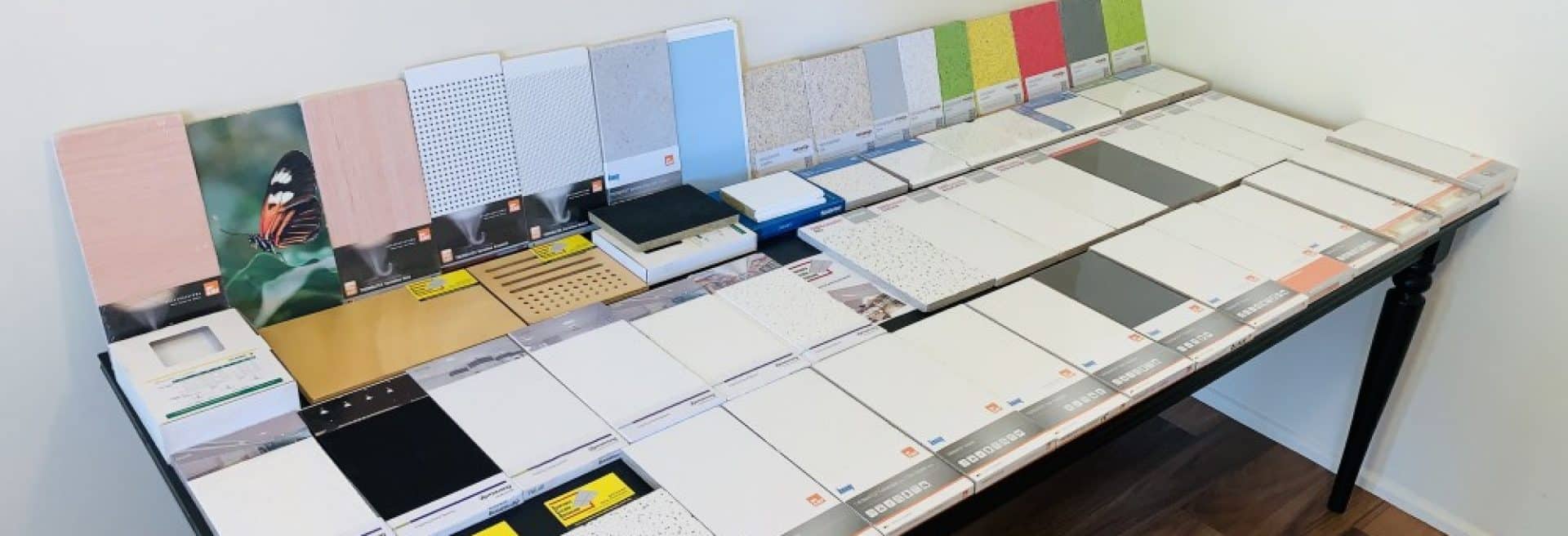

Water-resistant ceiling tiles are essential in areas exposed to moisture, humidity, or frequent cleaning. Bathrooms, amenities, commercial kitchens, laboratories, and some warehouse environments all place higher demands on ceiling systems than standard office spaces.
In the past, designers had limited options for water-resistant ceiling tiles, which often pushed projects toward concealed plasterboard ceilings. While plasterboard suits some applications, it restricts access to services and complicates future modifications. In commercial environments, a correctly designed exposed suspended ceiling system provides far greater flexibility when moisture is a concern.
Where water-resistant ceiling tiles are used
Water-resistant ceiling tiles are most often specified in:
- Bathrooms and amenities
- Change rooms
- Commercial kitchens and food prep areas
- Pool surrounds
- Laboratories
- High-humidity retail and warehouse spaces
In these environments, standard mineral fibre ceiling tiles can stain, sag, or break down over time. Selecting the correct ceiling tile — and grid system — is critical to long-term performance.
Example: Knauf AMF Thermatex Aquatech ceiling tiles
One proven option we have installed is Knauf AMF Thermatex Aquatech, a purpose-made water-resistant ceiling tile designed for humid and wet environments.
Aquatech ceiling tiles come in a 1200 × 600 square-edge format, making them suitable for most 1200 × 600 exposed suspended ceiling grid systems. In areas with high moisture or condensation risk, installers may also specify an aluminium ceiling grid to reduce the likelihood of corrosion.
Installers commonly use Aquatech tiles in amenities, commercial kitchens, and service areas where moisture resistance is essential.

Acoustic and performance considerations
In addition to moisture resistance, Aquatech tiles also offer strong acoustic performance.
- NRC rating of 0.90, which is higher than many standard mineral fibre tiles
- Suitable for spaces where sound control is important
- Cleanable fleece face allows most marks to be wiped away
It’s worth noting that while Aquatech performs well acoustically, its CAC rating is lower than some thicker acoustic tiles. Where flanking noise is a concern, additional acoustic treatment above the ceiling may be required.
Why exposed grid ceilings perform better in wet areas
Before water-resistant ceiling tiles became widely available, installers commonly used concealed plasterboard ceilings in wet areas. While effective in some applications, these ceilings restrict access to services and make future modifications difficult.
An exposed suspended ceiling allows:
- Easy access to services
- Flexible lighting layouts
- Ceiling-based air conditioning systems hidden above the grid
- Simple tile replacement if damage occurs
For many commercial spaces, this flexibility makes exposed grid ceilings a more practical long-term solution.
Installation matters as much as the tile
Even the best water-resistant ceiling tile can fail if installed incorrectly. Common issues we see include:
- Incorrect grid selection for humid environments
- Corrosion caused by unsuitable fasteners
- Poor ventilation above the ceiling
- Tiles installed in applications they were not designed for
Selecting the correct tile, grid, and installation method ensures the ceiling performs as intended.
Other water- and humidity-resistant ceiling options
Aquatech is just one example of a ceiling tile designed to handle moisture. Other ceiling tiles are available that offer varying levels of humidity and moisture resistance. The correct choice depends on:
- Exposure levels
- Cleaning requirements
- Acoustic needs
- Ceiling system design
If you’re unsure which water-resistant ceiling tile is suitable for your space, professional advice early in the process can prevent costly issues later.
👉 View our full range of ceiling tiles